
Introduction
Have you ever seen someone helping a nurse or doctor in a clinic or hospital and wondered what their job is? That person may be a health technician — someone who plays a very important role in the world of healthcare. So, what is a health technician exactly? In simple words, a health technician is a trained professional who helps with many tasks in medical settings. They might take your temperature, run simple tests, help with paperwork, or assist other healthcare workers. They are not doctors or nurses, but they make it easier for doctors and nurses to do their jobs. This guide will help you understand what a health technician does, where they work, how to become one, and more. Whether you’re curious about this career or just want to know more about the people who help keep us healthy, keep reading — we’ll explain everything in a fun, friendly, and easy-to-understand way.
What Is a Health Technician?
Let’s answer the big question right away: What is a health technician? A health technician is a medical worker who helps doctors, nurses, or other health professionals. They usually work in hospitals, clinics, labs, or dental offices. Health technicians take care of many duties depending on where they work. For example, they might help take blood, check vital signs, work with medical machines, or talk to patients. Some might also do computer work, enter data, or explain things to patients in simple language. There are several types of health technicians, like lab techs, pharmacy techs, dental assistants, and radiology techs. No matter the field, their goal is the same — to support health professionals and provide good care to patients. This job combines people skills, technical skills, and a strong heart for helping others.
Why Health Technicians Are Important in Healthcare
Healthcare is a busy place, and health technicians help keep everything running smoothly. They take care of tasks that doctors or nurses might not have time for. This helps hospitals and clinics work better and faster. Let’s say you visit a clinic. A health technician might greet you, check your blood pressure, guide you to the exam room, and help get your health info ready for the doctor. They save time and make sure everything is in order. That’s a big deal. Doctors and nurses rely on health techs to be accurate, responsible, and kind. Without help from health technicians, the system would slow down, and patient care wouldn’t be as smooth. That’s why health technicians are like the engine behind the scenes — working hard every day to keep the team moving forward.
The Different Types of Health Technicians
There’s not just one kind of health technician. In fact, there are many types, and each one focuses on a different part of healthcare. Some common kinds include: – Medical Laboratory Technicians – They test blood, urine, and other samples in a lab. – Pharmacy Technicians – They help prepare and give out medicines in drugstores and hospitals. – Radiologic Technicians – They take x-rays and use machines to scan parts of the body. – Dental Assistants – They help dentists during check-ups and cleanings. – Surgical Technicians – They support doctors during surgeries. – Ophthalmic Technicians – They work with eye doctors and assist with eye tests. So, when you ask “what is a health technician,” remember — the answer may depend on what kind of technician someone is. Each one supports a different part of health care!
Where Do Health Technicians Work?
Health technicians can work in many different places, depending on their specialty and training. Most common workplaces include: – Hospitals – They’re full of technicians in labs, x-ray rooms, pharmacies, and surgery teams. – Clinics – Small clinics often hire techs to help doctors and nurses treat patients. – Dental Offices – Dental assistants help with cleanings, fillings, and exams. – Labs – Lab techs work behind the scenes, testing samples and checking for problems. – Pharmacies – You’ll find pharmacy techs assisting pharmacists in stores or hospitals. – Eye Clinics – Eye care techs help test vision and prepare patients for the doctor. Some health techs even work in military facilities, research labs, or public health centers. Everywhere people need medical help or testing, you’ll likely find a health technician doing great work.
What Do Health Technicians Do Each Day?
The daily job of a health technician depends on where they work, but many tasks are similar. Here are some common things they might do: – Take vital signs like blood pressure, temperature, and pulse. – Draw blood or collect samples for testing. – Run simple lab tests. – Prepare exam rooms or surgical tools. – Help patients get ready for procedures. – Record patient information in computers. – Explain procedures in friendly, easy words. – Assist doctors and nurses during exams or treatments. Health technicians often work with people all day, so they must be good listeners, careful workers, and kind team members. Each task may seem small, but together, it adds up to a big impact on patient care.
How to Become a Health Technician

If you’re wondering how to become one, good news — being a health technician doesn’t mean spending 10 years in college! Most health technician jobs can be reached with a high school diploma and additional training, certificates, or an associate degree. Here are the usual steps: 1. Finish high school – Focus on science and math if you can. 2. Pick a program – Choose a course, training, or certification for your field (lab tech, radiology, pharmacy, etc.). 3. Graduate and get certified – Some jobs may ask you to pass an exam for a license. 4. Apply for jobs – Hospitals, clinics, dental offices, and labs are always looking for trained health techs. Many programs take 6 months to 2 years, depending on the type of technician you want to be.
Skills Every Good Health Technician Should Have
To do well in this field, you need the right mix of people skills and technical know-how. Here are some top skills that help every health technician succeed: – Attention to detail – Small mistakes can cause big problems in healthcare. – Good communication – You’ll need to talk clearly with patients and co-workers. – Teamwork – Health techs help doctors and nurses do their jobs, so working together matters. – Time management – Many tasks must be done quickly and in order. – Empathy – Caring for sick people means showing kindness and respect. – Computer skills – Patient records, lab results, and schedules are often digital now. You may not need to know everything on day one, but these are the qualities you’ll grow as a health technician.
The Tools Health Technicians Use
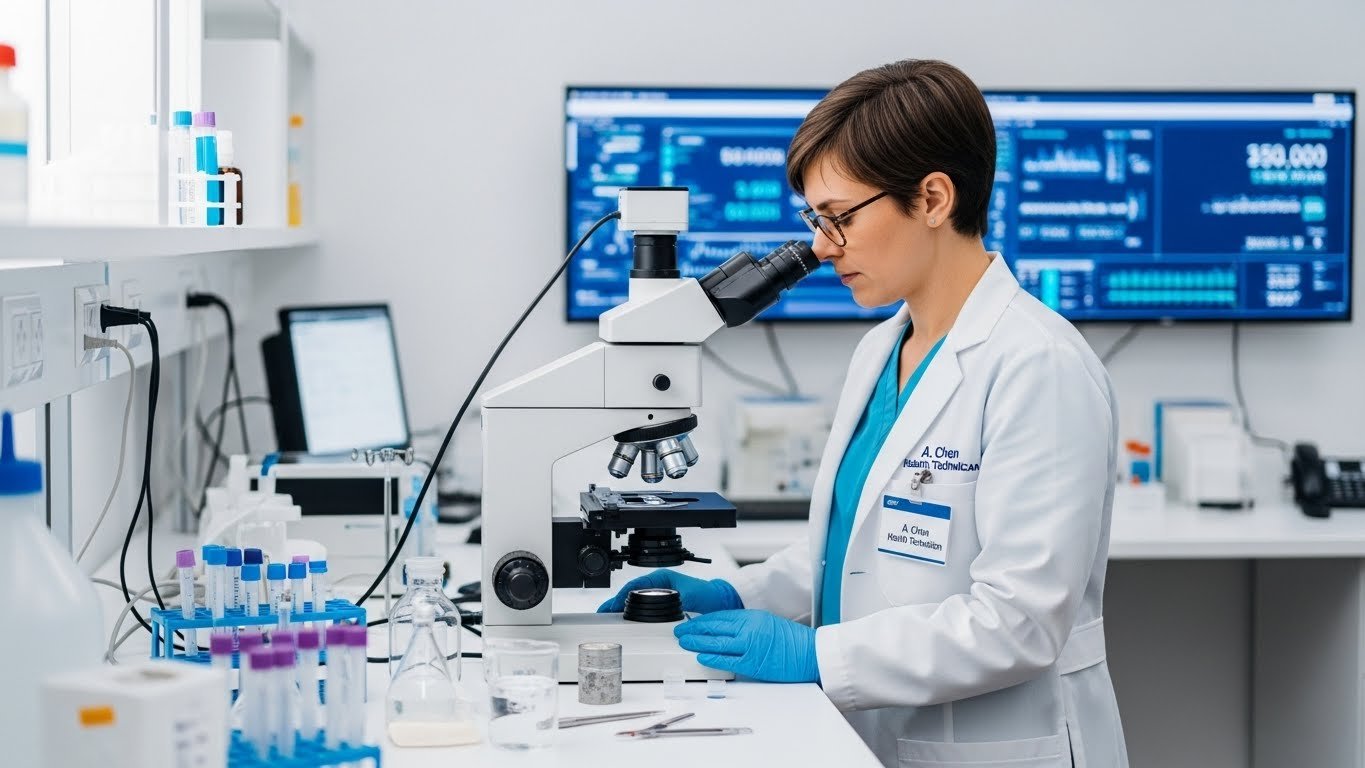
Every health technician uses different tools, depending on their job. But many use a mix of medical devices, computers, and safety gear. Here are some examples: – Stethoscopes and thermometers for checking vital signs. – Lab equipment like microscopes and test tubes for lab techs. – X-ray or imaging machines for radiology technicians. – Dental tools for assistants working with dentists. – Medical software for inputting and managing patient data. – Gloves, masks, and protective gear to stay clean and safe. Learning to handle these tools safely and correctly is part of the training you get while becoming a health technician.
Job Outlook: Are Health Technicians in Demand?
Yes! The need for health technicians is growing every year. As more people seek medical care, hospitals and clinics need more trained workers to help. According to the U.S. Bureau of Labor Statistics, some health tech fields are growing faster than average. For example: – Medical lab techs may grow by 7% or more by the decade’s end. – Pharmacy techs, dental assistants, and radiologic techs are also in high demand. Healthcare is one of the most stable fields to work in, and health technicians form a big part of that team. That means there will likely be many job opportunities in cities, towns, and rural areas across the country.
Why a Health Technician Career Is a Great Choice
Being a health technician can be a rewarding and meaningful job. You don’t need to be a doctor or nurse to make a real difference in people’s health. Here are a few big reasons people choose this career: – It doesn’t take many years of school. – You can find work in many places. – The work is steady, and pay is decent. – There’s room to grow — you can learn new skills and move up. – It feels good to help others every day. So next time someone asks “what is a health technician,” you can smile and say, “Someone who helps save lives while keeping things moving!”
FAQs
1. What is a health technician?
A health technician is a trained medical worker who helps doctors, nurses, and patients in healthcare settings. They perform tasks like taking vital signs, running tests, and assisting with treatments.
2. Do I need a college degree to become one?
Most health technician jobs only need a high school diploma plus a training program or certification — not a full college degree.
3. Where do health technicians work?
They work in hospitals, clinics, labs, dental offices, eye centers, and pharmacies — anywhere medical help is needed.
4. How long does it take to become a health technician?
Training programs can take 6 months to 2 years, depending on the field you choose.
5. What are the highest-paying health technician jobs?
Radiologic technicians, surgical techs, and cardiovascular techs often earn more due to their specialized skills.
6. Is being a health technician a good job for the future?
Yes! Healthcare jobs are growing, and health technicians are needed more than ever across the country.
Conclusion
Now that you’ve learned the answer to “what is a health technician,” maybe you’re thinking, “Could I do that too?” The good news is — yes, you can! With the right training, a caring heart, and a willing spirit, you could be part of this amazing world of healthcare helpers. Whether you’re just curious or seriously considering your career path, remember this: health technicians may not always be at the front of the room, but they are always a key part of the team. Their compassion, accuracy, and dedication help millions of people feel better every day. So, if you love helping others, like hands-on work, and want a job that brings real meaning, this might just be the perfect career for you.