
Introduction
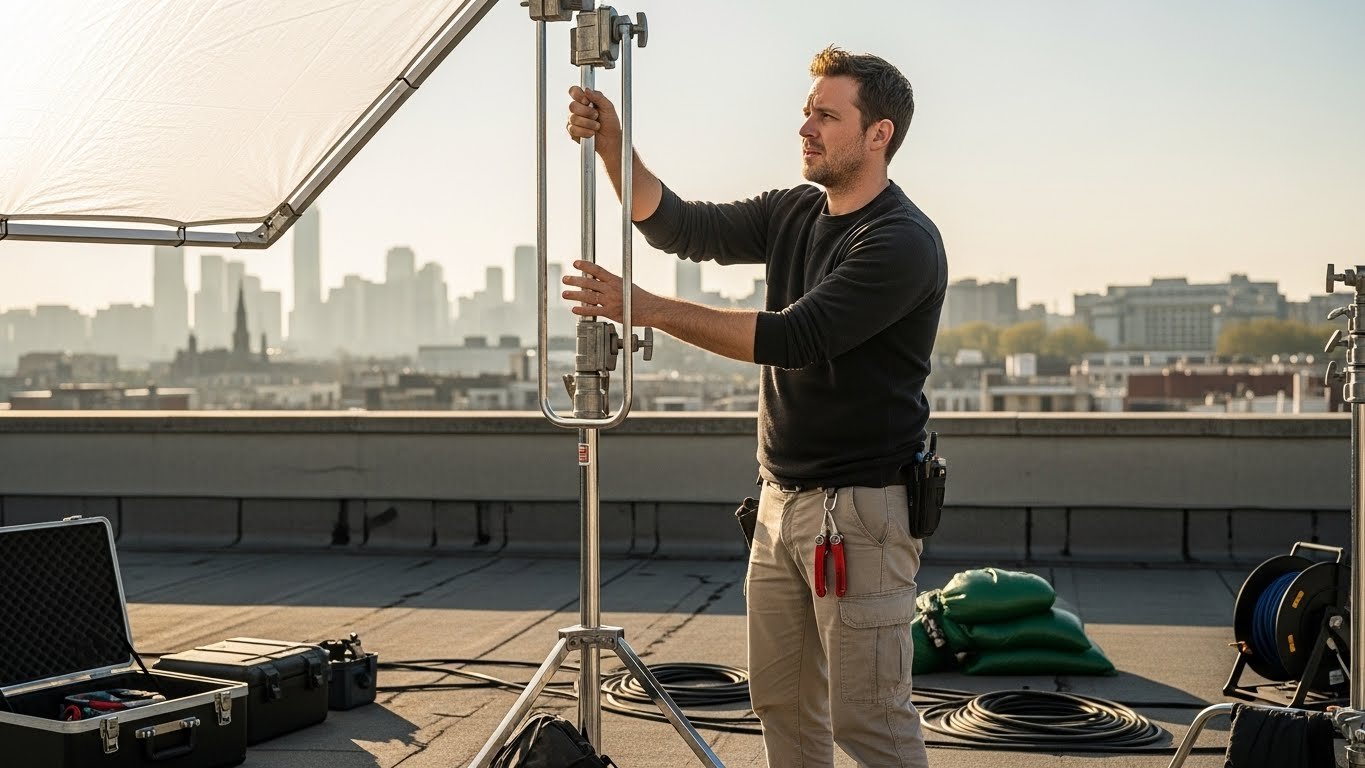
Have you ever watched a movie and wondered how cameras get those smooth shots or cool lighting effects? There’s a good chance a grip technician was behind the magic. But what is a grip technician, really? In simple terms, a grip technician is someone who works on film or TV sets and helps set up and move equipment. They make sure the camera is placed where it needs to be. They also help set up lighting tools and work closely with the camera and lighting crews. You don’t see them on screen, but their work makes the movie possible. In this article, we’ll explore who grip technicians are, what they do each day, how to become one, and why their job is so important. We’ll keep everything simple and fun—perfect if you’re just curious or thinking about a job in film production one day.
The Role of a Grip Technician on a Film Set
Let’s break it down. A grip technician, sometimes just called a “grip,” is part of a behind-the-scenes team in TV shows, films, or commercials. They are experts at setting up and handling large equipment. Their main job is to help the camera and lighting teams. That means: – Setting up tripods, tracks, and dollies (carts that move the camera) – Moving equipment into position for the next shot – Building rigs for lights, cameras, and shades – Making sure everything is secure and safe Grips are also problem solvers. If the lighting isn’t right or the camera needs to fly through the air, the grip team makes it happen. They work fast, use tools, and must be strong and smart.
What Does a Grip Technician Actually Do Each Day?
Every day on a movie set is different for a grip technician, but some tasks come up often. Here’s what a grip technician’s typical day might look like: – Arrive early to unload trucks with gear – Set up camera support tools like dollies, cranes, or sliders – Place flags and screens to block or shape light – Adjust rigging to help lighting setups (though they don’t deal with lights directly) – Move equipment during breaks or new scenes – Pack up everything after filming is done Grips also stay alert all the time. If something breaks or needs to move quickly, they’re ready. Their job is physical—they lift, build, climb, and stay on their feet nearly all day.
Grip Technician vs. Gaffer – What’s the Difference?
Some people confuse a grip technician with a gaffer, but they are two different roles. – A gaffer is the head of the electrical department. They work directly with lights and power. – A grip technician helps move equipment that supports the lights or shapes the light, like flags and reflectors. Grips usually don’t touch the lights themselves unless helping adjust their setup. They focus on building support structures and moving large tools safely into place. So, gaffers light the scene. Grips help the lighting look perfect and make the rigs that hold cameras and tools.
Types of Grip Technicians on Set
There are different types of grips, each with a specific job on set: – Key Grip: This is the boss of the grip team. They make big planning decisions and lead the crew. – Best Boy Grip: They help the Key Grip manage the team and equipment. – Dolly Grip: These grips focus on controlling the dolly – a cart that moves the camera smoothly. – Rigging Grip: These grips are experts at building special support systems for lights or cameras. Each role is important. Together, they form the grip team that helps each scene come together safely and smoothly.
Skills You Need to Become a Grip Technician
Being a grip technician isn’t easy, but the skills can be learned with training and practice. Here are the top skills needed: – Physical strength: Grips lift and move heavy things daily. – Problem-solving: They need to picture solutions quickly when scenes change. – Teamwork: A grip works closely with other departments, so communication matters. – Tool knowledge: They use wrenches, clamps, and other tools all the time. – Safety awareness: Grips often work high up on ladders or move giant setups. Staying alert is key. You also have to be okay with long hours. Filming days can last 10–14 hours or more!
Training: How to Become a Grip Technician
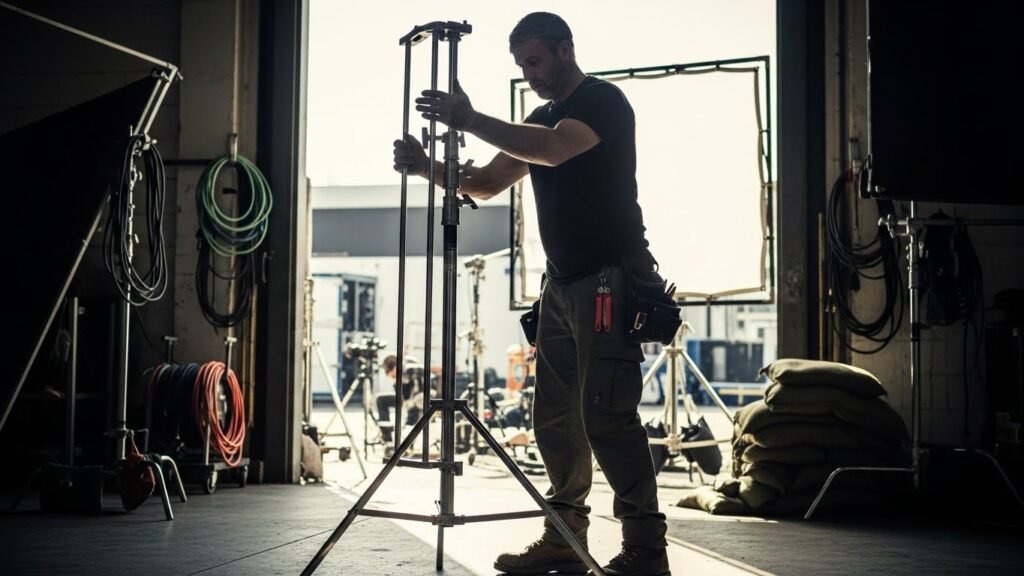
You don’t need a college degree to become a grip technician, but training and experience really help. Here are some helpful steps: 1. Start with a film school or program – Many technical schools or community colleges offer hands-on training. 2. Join a production as a production assistant (PA) – It’s an entry-level job, but it gets you on set. 3. Work as a grip trainee or intern – Watch the grip team, learn, and ask questions. 4. Join a union – Many grip jobs are union-based, like IATSE (the International Alliance of Theatrical Stage Employees). 5. Keep climbing with experience – You can move from general grip to dolly grip to key grip over time. Also, many grip techs love DIY projects. Building, fixing things, and solving hands-on problems help build the right mindset.
Tools and Equipment Used by Grip Technicians
Grip technicians use many tools every day. They help build, rig, and support all kinds of setups. Here are some common tools: – C-stands (used to hold lights, flags, or screens) – Sandbags (to weigh things down and keep them from tipping) – Flags and scrims (used to block or soften light) – Clamps and grip heads (to hold equipment together) – Dollies (a rolling platform for moving cameras) – Sliders and jibs (used for smooth camera movement) A grip truck on set is usually full of these items, and the grip crew needs to know where everything is. Staying organized is part of doing the job well.
Safety Is a Big Part of the Job
When you ask, “What is a grip technician?”—one big part of the answer is safety specialist. Grips help build sets, move gear around actors, and work in high or tight places. They’re responsible for making sure that: – Lights and cameras are supported properly – Staging isn’t loose or dangerous – No one trips over cords or gear – Heavy items are clamped and secured Grips must check safety at all times. A small mistake could cause big problems on set, so they do daily checks to keep everyone safe. If you care about helping others and love being careful, being a grip might be perfect for you.
Life on Set as a Grip Technician
Life as a grip technician is fast-paced, full of variety, and rewarding. You may be outside on location one day and in a studio the next. You might work in heat, cold, or rain. You work early mornings or late nights. But you also get to: – Be on movie and TV sets – Help bring creative scenes to life – Learn from experienced crews – Be part of a tight-knit team Grips often become like family. Crew members depend on each other, laugh together, and create cool stuff as a team. Many grips stay in this job for years, even decades, because they truly love being part of movie magic.
Career Growth and Pay for Grip Technicians
You might now be wondering, “Can I make a living as a grip technician?” Yes, you can! Starting out, grip technicians may make anywhere from $15 to $25 per hour. With experience and union work, pay can rise to $35–$50+ an hour. Some high-end jobs even offer overtime, benefits, and bonuses. As you get more experience, you can move up to roles like: – Best Boy (assistant crew lead) – Dolly Grip (camera mover) – Key Grip (the department head) The more you work, the more people you meet, and the better jobs you’ll get. Word-of-mouth is important in this field.
Why Grip Technicians Are the Backbone of Film Production
Grip technicians might not be in the spotlight, but without them, the spotlight wouldn’t even work! They are behind every scene’s structure — making actors safe, cameras move, and lighting perfect. They show up early, leave late, and never stop moving. While the camera rolls, the grip crew is already planning the next setup, ready to build again. So when someone asks, “What is a grip technician,” you can say: “They’re the strong, smart, hardworking heroes who help turn scripts into screen magic.”
FAQs
1. What is a grip technician?
A grip technician is a trained worker in film and TV who sets up equipment to help cameras and lights work properly.
2. Do grip technicians deal with lights?
Not directly. Grips help set up flags and gear for lighting, but gaffers handle the actual lighting.
3. Is this job physically demanding?
Yes, grips lift heavy gear, climb ladders, and stay on their feet all day — it’s very active work.
4. How do I become a grip technician?
Start with on-set experience or go to film school. Join a union like IATSE, and work your way up.
5. How much does a grip technician make?
Starting pay is about $15–$25 per hour. With experience or union work, it can go higher — even over $50/hour.
6. Is being a grip a good long-term career?
Yes! Many people enjoy decades-long careers as grips, moving into leadership roles and working on movies, TV, and more.
Conclusion
Now that you know the full answer to “What is a grip technician,” maybe you’re feeling inspired. Whether you love movies, enjoy hands-on work, or want to be part of something exciting, this is a career filled with motion, teamwork, and big rewards. Being a grip technician means showing up with energy, solving problems, working hard, and hearing “Action!” just feet away from movie stars. The hours can be long, but the joy of seeing your work on screen is worth it. If you like tools more than keyboards and action more than office work, helping build the heart of great film scenes as a grip technician may be a perfect fit.