Introduction
If you love icy treats on hot days, then you need to try bingsoo. Pronounced “bing-su,” this Korean dessert is a delicious mix of shaved ice, sweet toppings, and loads of flavor. It’s colorful, creative, and super refreshing. One bite is like eating a tasty snow cloud!
Bingsoo has become super popular in many parts of the world. From simple red bean versions in traditional Korean cafes to wild creations with chocolate, fruit, or even cheesecake, there’s something for everyone. It’s more than just a dessert—it’s an experience you can enjoy with friends or family.
In this article, we’ll dive deep into the world of bingsoo. You’ll learn what it is, where it came from, how it’s made, and why it’s so special. Whether you’re a foodie, a traveler, or just someone with a sweet tooth, this sweet Korean ice treat will leave you craving more. Let’s chill out and explore the wonderful world of bingsoo together!
What Is Bingsoo? The Basics of This Sweet Korean Ice Treat
Bingsoo is a Korean dessert made from finely shaved ice and fun toppings like fruit, sweets, or syrup. The ice is so soft and fluffy, it almost feels like fresh snow. Then it gets loaded with colorful, tasty extras to turn it into a sweet masterpiece.
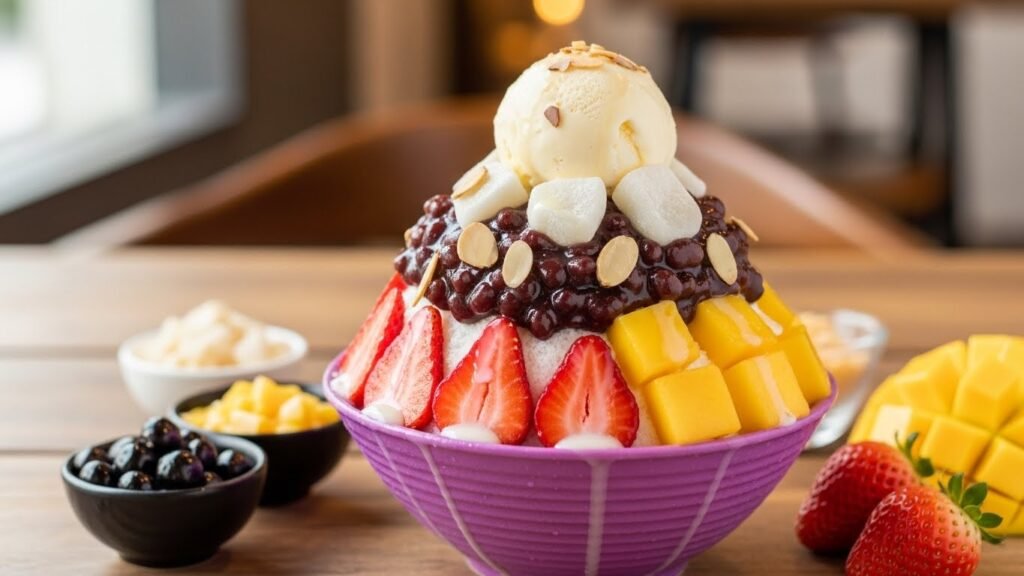
A classic bingsoo might come with red beans (called “pat” in Korean), a drizzle of condensed milk, and chewy rice cakes. But today, you’ll find bingsoo topped with strawberries, matcha, Oreos, cereal, mango, or even chocolate brownies. Some versions even have scoops of ice cream on top.
It’s usually served in a bowl that’s big enough to share. Many people enjoy it as an afternoon treat or a fun way to cool down in summer. No matter how it’s served, bingsoo is all about mixing cool textures with sweet, exciting flavors.
The Origin Story: Where Did Bingsoo Come From?
Long before bingsoo became trendy in dessert cafes, it had simple beginnings in Korean history. The idea of using shaved ice as a treat goes back hundreds of years, even as far back as the Joseon Dynasty in Korea.
In the past, royal staff would take blocks of ice stored in ice houses and shave them into fluffy piles. These were topped with fruit or honey and served to nobility as a cool, refreshing dessert on hot days. Over the years, more flavors and ingredients were added, turning this once-royal delight into something everyone could enjoy.
The modern bingsoo that many people know today became popular in the 1900s. It started with red beans, known as patbingsoo, and then grew with more variations thanks to cafes and food trends. Now, it’s a dessert loved by kids and adults alike, both in Korea and around the world.
What Makes Bingsoo Different From Other Shaved Ice Desserts?
At first glance, you might think bingsoo is just another shaved ice dessert, like snow cones or Hawaiian shave ice. But it’s much more than that!
Here’s what makes bingsoo totally unique:
- The ice is ultra-fine and often made from milk or cream, not just water—making it soft and milky, not crunchy.
- The toppings are rich and playful, including fresh fruit, sticky rice cakes, cereal, cheesecake, or chocolate syrup.
- The presentation is beautiful. Many bingsoo bowls look like desserts you’d see in a bakery or on Instagram.
- The flavor balance—bingsoo isn’t just sweet. It often has creamy, chewy, and fruity parts all in one bite.
This makes the bingsoo meaning something larger than just ice—it’s a true dessert experience that brings joy with each spoonful!
Popular Types of Bingsoo You’ll Fall in Love With
There are so many types of bingsoo that there’s something for everyone! Here are some of the most popular and must-try flavors:
- Patbingsoo: The classic version with sweet red beans, condensed milk, and chewy rice cakes.
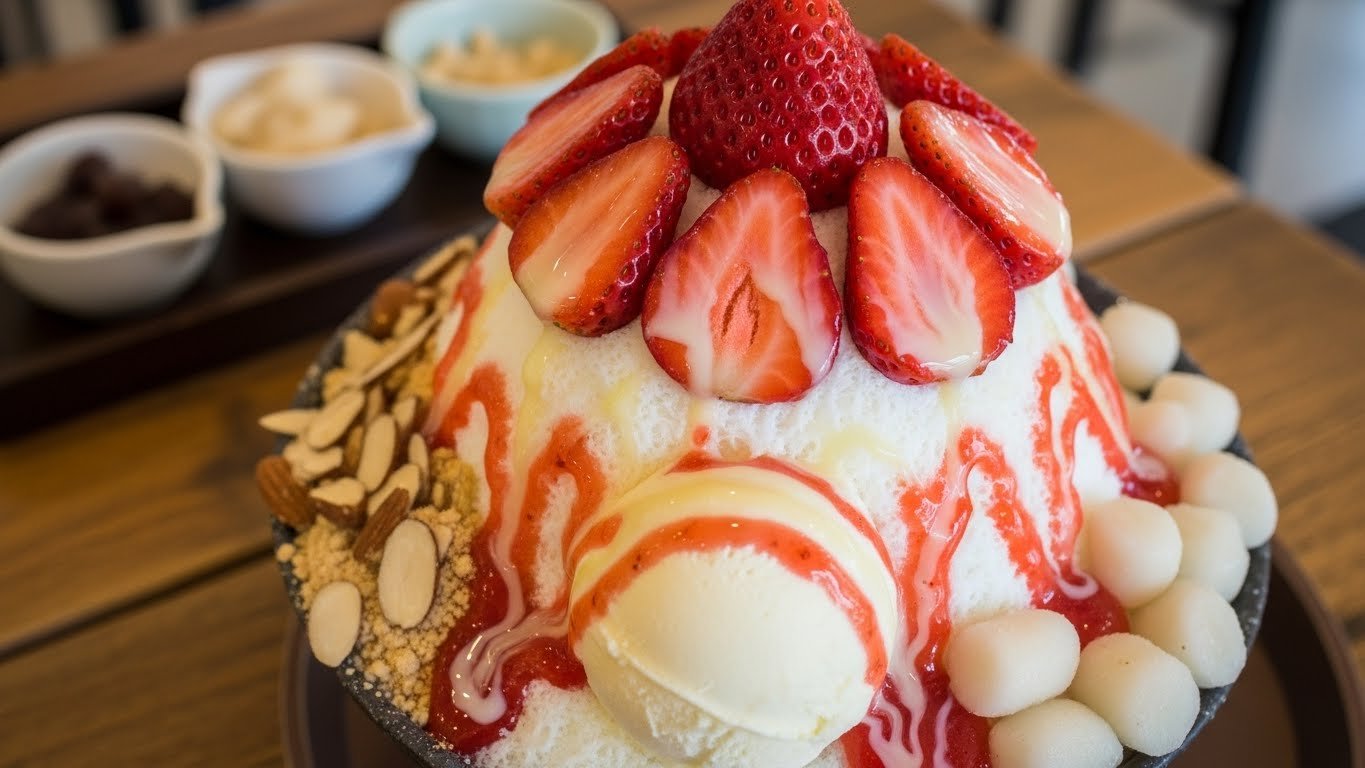
- Strawberry Bingsoo: Fresh strawberries, milk ice, and strawberry syrup—super fruity and sweet!
- Mango Bingsoo: Juicy mango cubes on soft ice, often with mango sauce and whipped cream.
- Green Tea (Matcha) Bingsoo: Made with matcha powder, red beans, and sometimes a scoop of matcha ice cream.
- Injeolmi Bingsoo: Covered in roasted soybean flour and chewy rice cakes—nutty and super satisfying.
- Chocolate Bingsoo: Loaded with brownies, chocolate syrup, cocoa powder, and chocolate chips.
And guess what? Some places even serve bingsoo with cotton candy, whole cheesecake slices, or cereal. It’s dessert with no limits!
What Ingredients Go into a Bingsoo?
Even though bingsoo looks fancy, it’s made of just a few simple parts:
- Shaved Ice – This is usually made from milk or water and is shaved very thin for a soft, snowy texture.
- Sweet Toppings – Common ones include red beans, fruits (like strawberries, mangoes), and syrups (like condensed milk or chocolate).
- Cream or Ice Cream – Many cafes add a scoop of vanilla or matcha ice cream for extra flavor.
- Extras – Think: mochi pieces, cereal flakes, cheesecake cubes, whipped cream, jelly, or even boba pearls.
The cool part? You can mix and match almost anything. The only rule with bingsoo is to keep it delicious and fun!
How Is Bingsoo Made? A Simple Step-by-Step
You might think bingsoo is hard to make, but it’s actually pretty simple—especially with the right tools! Here’s a basic way to make your own bingsoo at home:
- Freeze milk (or water) in a shallow container or use an ice tray. If possible, use milk for extra creaminess.
- Shave the ice using a machine or blender until it’s super fine and fluffy like snow. You can also buy a bingsoo machine!
- Scoop the shaved ice into a big dessert bowl.
- Add toppings like cut fruit, red beans, cereal, or syrup. Start layering from the bottom and build up!
- Top with a scoop of ice cream, drizzle of condensed milk, and maybe a cherry on top.
Now grab a spoon and dig in! Homemade bingsoo is a great summer treat, and you can get super creative with it.
Where Can You Find Bingsoo Around the World?
Bingsoo has become more than just a Korean dessert—it’s now a sweet treat enjoyed worldwide. As Korean food and culture spread through K-Pop, K-dramas, and travel, bingsoo followed along.
You’ll find bingsoo in:
- Korean dessert cafes in big cities like Los Angeles, New York, London, and Toronto
- Asian dessert spots or bubble tea shops that serve Korean treats
- Korean grocery store cafes with food courts
- Pop-up events or food festivals with Korean culture themes
Not sure where to start? Search “bingsoo near me” or “Korean dessert cafe,” and keep an eye out for pictures that show fluffy, colorful bowls of icy goodness!
Bingsoo Through the Seasons: Best Time to Enjoy It
Bingsoo is a go-to treat on hot summer days, but honestly—it’s good ALL year round.
Summer is definitely peak season. People love it when the sun’s out, and they’re looking for cold snacks. It’s refreshing and light, not heavy like cake or fried desserts.
But bingsoo is also perfect:
- After a spicy Korean meal
- During winter, when warm interiors make cold treats feel cozy
- At birthday parties or celebrations
- As a cute date dessert to share
Some cafes even create seasonal flavors like peach bingsoo in spring or Christmas-style bingsoo with cookies and whipped snow.
Cultural Fun: Bingsoo in Korean Pop Culture
If you watch K-Dramas or follow K-Pop stars, you may have already seen bingsoo without realizing it. It’s a common treat featured in cafe scenes, friendship moments, or even romantic dates.
Many Korean idols have shared photos and videos of themselves enjoying bingsoo at cute cafés. It’s become not just a dessert—but a must-have experience in Korean youth and pop culture.
For fans of Korean culture, trying bingsoo is like walking into a real-life scene from your favorite show!
Health and Nutrition: Is Bingsoo a Good Choice?
Let’s talk sweet and healthy.
Bingsoo is definitely a dessert, so yes—it does have sugar, ice cream, and toppings. But depending on how you order or make it, it can be lighter than you think.
You can keep bingsoo healthier by picking:
- Fruit toppings (like mango or berries)
- Milk-based shaved ice over full scoops of ice cream
- Less syrup and more natural ingredients
Also, since bingsoo is usually shared, everyone gets a treat without overdoing it. It’s cold, fun, and can be one of the lighter dessert options if you build your bowl wisely.
Why Kids and Adults Both Love Bingsoo
The best part about bingsoo is that EVERYONE can enjoy it—kids, teens, adults, and even older folks!
Kids love it because:
- It looks like a snow mountain.
- It has fun toppings like sprinkles, jelly, or cereal.
- It’s interactive—they get to scoop and mix it!
Adults love bingsoo because:
- It’s light, not greasy or too heavy.
- It’s a fun treat after a spicy meal or long day.
- It brings people together to share, chat, and enjoy the moment.
It’s more than just ice. It’s a joyful, delicious break in the day.
FAQs
1. What does bingsoo mean?
Bingsoo is a Korean word for “shaved ice.” It usually refers to a dessert made of shaved ice and toppings.
2. Is bingsoo the same as a snow cone?
No. Bingsoo has very fine, fluffy ice—often milk-based—and many different toppings. Snow cones are harder and crunchier.
3. What are the most popular bingsoo toppings?
Red beans, mango, strawberries, condensed milk, rice cakes, chocolate, and green tea are super popular toppings.
4. Can you make bingsoo at home?
Yes! All you need is shaved ice, your favorite toppings, and a bowl. You can get creative with the ingredients.
5. Is bingsoo a healthy dessert?
It can be! Choose fresh fruit, milk ice, and fewer sugary toppings to make it a lighter option.
6. Where can I try bingsoo outside Korea?
Look for Korean dessert cafes, bubble tea houses, or Asian-style food courts in cities around the world.
Conclusion
In a world full of desserts, bingsoo stands out as something special. It’s light, fun, colorful, and super tasty. Whether you love it traditional with red beans, or modern with chocolate and berries, there’s a bingsoo bowl out there that’ll make your sweet tooth smile.
More than just an icy treat, bingsoo brings people together. It’s a dessert worth sharing and remembering. Whether you’re a curious foodie or a K-pop fan, trying bingsoo is like tasting a cool piece of Korean culture.
So next time you need a refreshing dessert idea—or want to try something new—look for bingsoo. You just might find your next favorite spoonful of joy.