
Introduction
Have you or someone you love ever had red, itchy skin that just wouldn’t go away? If yes, there’s a chance it could be spongiotic dermatitis. Don’t worry—the name may sound complicated, but we’re here to make it easy to understand.
Spongiotic dermatitis is a common skin condition. It often means your skin is inflamed, itchy, and sometimes scaly. This condition shows up in many types of skin problems such as eczema, rashes, or allergic reactions. It happens when your skin’s outer layer swells up from irritation or a reaction to something.
In this article, we’ll break it all down for you. You’ll learn what spongiotic dermatitis really is, what causes it, how it looks, and what can help it heal. We’ll also give you helpful tips, personal insights, and easy-to-read answers to common questions.
Get ready for a clear, friendly guide to help you and your skin feel better. Let’s start with the basics!
What Is Spongiotic Dermatitis? A Simple Explanation
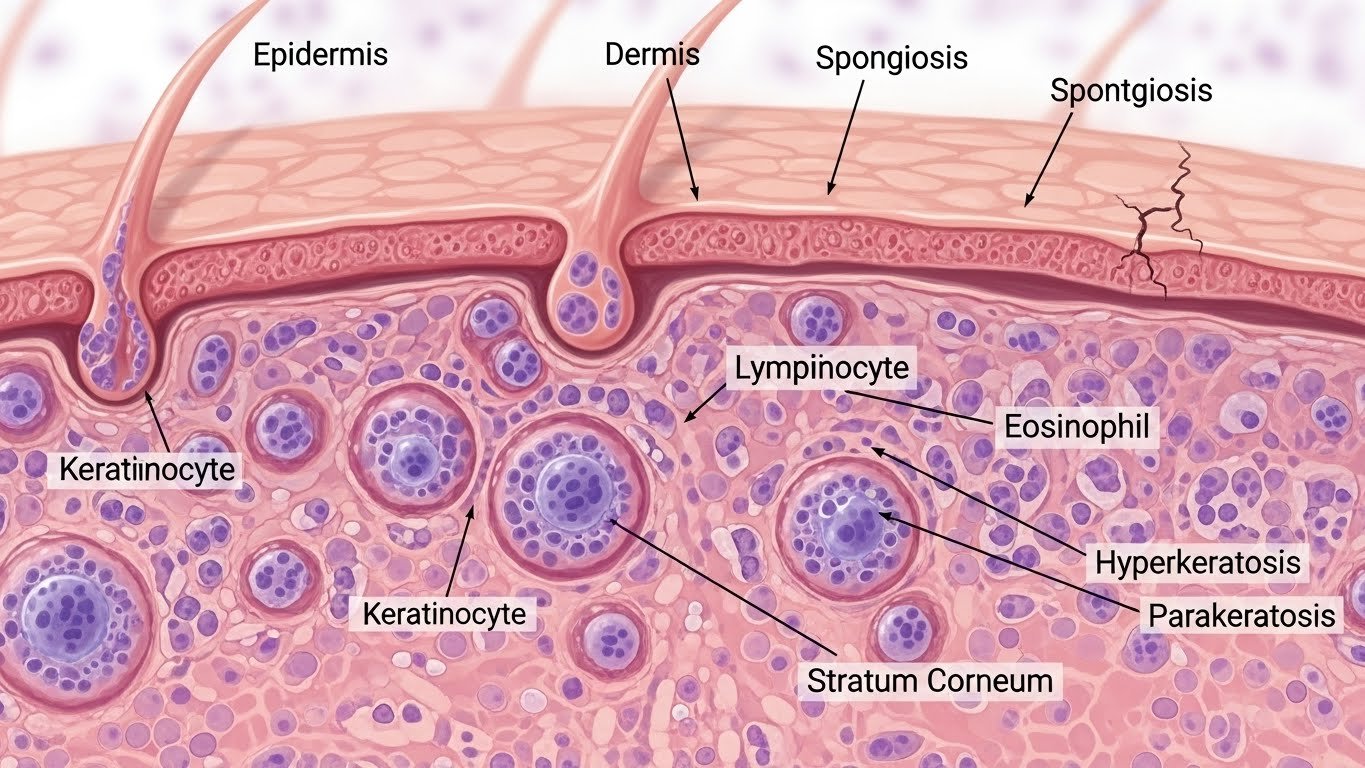
Spongiotic dermatitis is a medical term for swelling inside your skin’s outer layer—the epidermis. This swelling happens because fluid builds up between the skin cells, almost like little bubbles. That’s what “spongiosis” means—it’s sponge-like swelling.
This swelling may cause your skin to become red, itchy, and uncomfortable. Sometimes it may even ooze, flake off, or form blisters. It’s not a disease on its own, but rather a reaction your skin has when something irritates it or causes an allergic response.
Doctors often see spongiotic dermatitis when looking at skin samples under a microscope. If you’ve heard of eczema, atopic dermatitis, or contact dermatitis, those are types of skin conditions that can feature spongiotic dermatitis.
So, in simple words, it’s your skin crying out for help because something is not right.
What Causes Spongiotic Dermatitis?
There are many things that can cause spongiotic dermatitis. Your skin is like a barrier. It protects you, but sometimes, things get through or upset it.
Some common causes include:
- Allergens: Things like soaps, detergents, perfumes, or even metals (like nickel) can cause allergic reactions on the skin.
- Irritants: Chemicals at work or home, heat, or harsh fabrics can also bother the skin.
- Stress: Yes, even stress can trigger your skin to break out in a rash.
- Genetics: If parents or siblings have eczema or other skin conditions, you might be more likely to develop one too.
- Food allergies or reactions: These are less common but sometimes seen in children.
- Seasonal changes: Dry air in the winter is a common trigger.
The cause can be different from person to person. That’s why doctors often ask about your habits, job, products you use, and medical history.
Who Can Get Spongiotic Dermatitis?
Anyone can get spongiotic dermatitis—kids, teens, adults, even babies. However, some people are more likely to develop it.
You might be at higher risk if:
- You have a family history of eczema or asthma
- You work with chemicals, metals, or wet environments
- You have sensitive skin or allergies
- You don’t protect your skin from drying out
Children often develop what’s called atopic dermatitis, which is a type of spongiotic dermatitis. Adults may start seeing signs later in life due to repeated irritation from the environment or stress.
It’s important to know it’s not contagious! You can’t catch spongiotic dermatitis from someone else, and they can’t catch it from you.
Signs and Symptoms: What Does It Look and Feel Like?
When your skin is reacting, it doesn’t always feel the same from person to person. But most people with spongiotic dermatitis notice a few common things.
Here are the typical symptoms:
- Itching: It may feel constant or come and go.
- Redness: The skin may look inflamed or irritated.
- Dryness or flaking: Skin might peel or feel rough.
- Swelling: Especially in the early stages.
- Blisters or bumps: In more severe cases, fluid-filled blisters may form.
- Cracked skin or oozing: In long-term or scratched areas, the skin may crack or leak.
These patches can show up anywhere, but they are often seen on the arms, hands, chest, legs, or face.
Some people only get mild irritation, while others may have frequent, painful flare-ups. No matter what, you don’t have to suffer silently—help is available.
How Is Spongiotic Dermatitis Diagnosed?
When you visit a doctor for a skin condition, they’ll usually begin by looking at your skin, your symptoms, and your medical history. They may ask you about what products you’ve used recently, if you’ve changed your laundry soap, or if you’re under any new stress.
But to be 100% sure it’s spongiotic dermatitis, doctors may take a small sample of your skin (called a biopsy). A lab will look at the sample under a microscope. If they see signs of swelling between skin cells (spongiosis), they can confirm the diagnosis.
A biopsy usually takes just a few minutes and isn’t very painful. Your doctor may also suggest patch testing if they think an allergy is causing the problem.
The sooner you get a diagnosis, the sooner you can get relief.
Treatment Options: What Can Help Spongiotic Dermatitis?
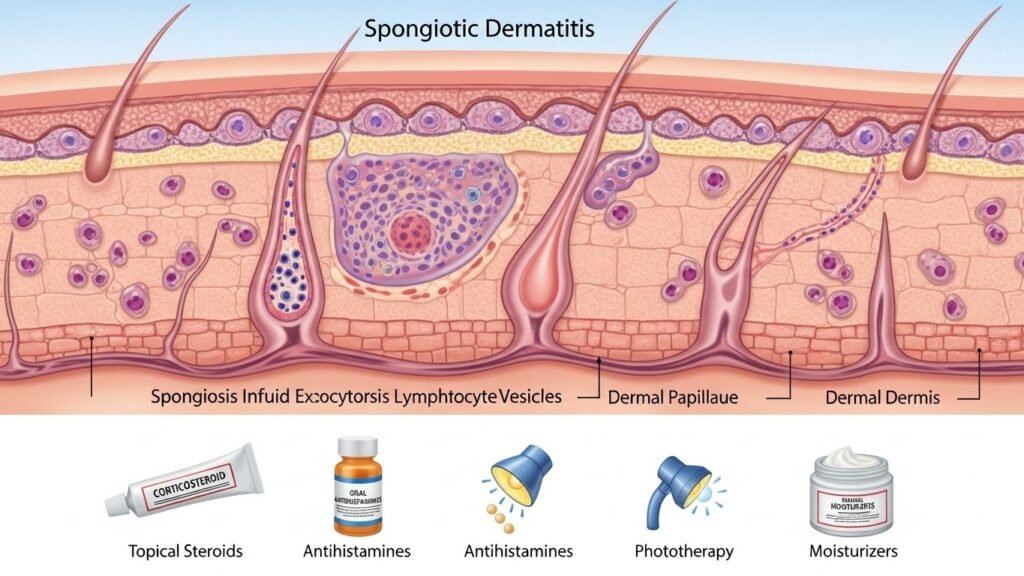
Good news! Most people with spongiotic dermatitis can find fast relief with the right care. Treatments focus on soothing the skin, stopping the itching, and keeping the skin healthy.
Here are common treatment options:
- Topical corticosteroids: These are creams or ointments that lower inflammation and reduce itching.
- Moisturizers: Keeping your skin hydrated is super important. Use thick, fragrance-free creams often.
- Antihistamines: Oral pills can help reduce itching—especially at night.
- Avoiding triggers: Stay away from anything you suspect is causing flare-ups (like certain soaps or fabrics).
- Cool compresses: Placing a cool, damp cloth on irritated skin can be very soothing.
- Oatmeal baths: These are natural and can calm the skin gently.
In more serious or long-term cases, a doctor may prescribe a stronger lotion or even oral medication for short periods. Always talk with a healthcare provider before starting new treatments.
Lifestyle Tips to Manage and Prevent Flare-Ups
Managing spongiotic dermatitis isn’t just about medications—it’s also how you care for your skin every day.
Here are some lifestyle tips that really make a difference:
- Moisturize daily: Apply cream after every shower to lock in moisture.
- Use mild soaps: Skip perfumed products and go fragrance-free.
- Wear soft clothes: Cotton is best; avoid scratchy wool or tight outfits.
- Stay cool: Heat and sweat often trigger itching.
- Keep nails short: This helps prevent damage if you scratch.
- Rinse after swimming: Chlorine or saltwater can dry out your skin.
- Wash new clothes before wearing them: They may have chemicals or dyes.
Every little thing you do to care for your skin adds up. Being gentle and consistent with your routine can lower how often your symptoms appear and how bad they get.
Is Spongiotic Dermatitis Long-Term?
This depends on the cause. In many cases, spongiotic dermatitis can clear up fairly quickly, especially if triggered by something that can be removed. For example, if a new detergent caused a rash and you stop using it, your skin may heal in just a couple of weeks.
But for some people—especially those with chronic eczema or allergic skin types—the condition can come and go over time. This is called having “flare-ups.”
The good news is that it’s treatable and manageable, especially with support from a doctor, good skin care, and by avoiding triggers. While there’s no quick fix for everyone, many people lead comfortable lives with only mild symptoms now and then.
How Do Kids and Adults Compare with Spongiotic Dermatitis?
Kids and adults can both get spongiotic dermatitis, but the signs may show up in different ways.
In kids, especially babies, it often shows up as dry, red patches on the cheeks, legs, or scalp. Children may feel itchy but not always know how to explain it. Sometimes they scratch during sleep.
In adults, the condition may be more common on the hands, elbows, behind the knees, or in the neck area. Some working adults—such as hairstylists, healthcare workers, or cleaners—develop it from daily exposure to water or chemicals.
Children often outgrow the condition, but not always. In adults, it usually needs ongoing management. Either way, gentle care and a healthy routine can do wonders for both groups.
Can Diet Affect Spongiotic Dermatitis?
It might! While food doesn’t cause spongiotic dermatitis directly, certain diets can help or hurt your skin health.
Some people notice that spicy foods, dairy, or gluten seem to make flare-ups worse. Others feel better when eating more fruits, vegetables, and omega-3-rich foods (like salmon or walnuts). Some studies suggest anti-inflammatory diets can help support skin health.
What helps one person may not help another. If you think food might be affecting your skin, try:
- Keeping a food journal
- Watching for reactions 24–48 hours after eating something new
- Talking to a doctor or nutritionist
Remember, diet is just part of the puzzle. But eating nutritious, whole foods is always a great choice for overall health.
FAQs
1. Is spongiotic dermatitis contagious?
No, it’s not contagious. You cannot catch it from or give it to another person.
2. What triggers spongiotic dermatitis?
Common triggers include harsh soaps, allergic reactions, stress, heat, and dry air.
3. Can spongiotic dermatitis heal on its own?
Sometimes, yes—especially if the trigger is removed. But treatment often helps it heal faster and with less discomfort.
4. Should I see a doctor for mild spongiotic dermatitis?
If it’s not going away or getting worse, yes. A doctor can guide you on better care and treatment.
5. What kind of doctor treats spongiotic dermatitis?
A dermatologist, which is a skin doctor, is the best choice.
6. Can spongiotic dermatitis come back?
Yes, it can return, especially if the cause hasn’t been addressed. But many people manage it successfully long-term.
Conclusion
If you or someone you love has spongiotic dermatitis, it’s okay. You’re not alone. It may feel uncomfortable or frustrating at times, but there are ways to care for your skin and feel better.
Every person’s skin is different. What works for one person may not work for another. The good news? There are many helpful treatments available. From moisturizing more often to using the right creams, avoiding triggers, and following gentle routines—every action helps.
Remember, healing doesn’t always happen overnight. But with patience, support, and knowledge, your skin can feel calm and happy again.