
Introduction
Have you ever heard of the doomsday fish oarfish? It sounds spooky, doesn’t it? But don’t worry, it’s not here to end the world. The oarfish is a very long, very rare fish that lives deep in the ocean. People sometimes connect it with earthquakes or tsunamis, which is why it got the nickname “doomsday fish.”
This sea creature is full of mysteries and wonder. It’s not dangerous, but it sure looks strange—like something out of a sea monster story. Oarfish are hard to find because they live very deep underwater. But every now and then, one floats to the surface or washes up on shore, causing people to wonder what it means.
In this article, we’ll explore everything about the doomsday fish oarfish. We’ll look at how it lives, what it eats, and why some people fear it. You’ll also find cool facts and fun answers to questions kids and adults are curious about. Let’s dive in together and discover the secrets of this awesome deep sea giant!
What Is an Oarfish? A Simple Explanation
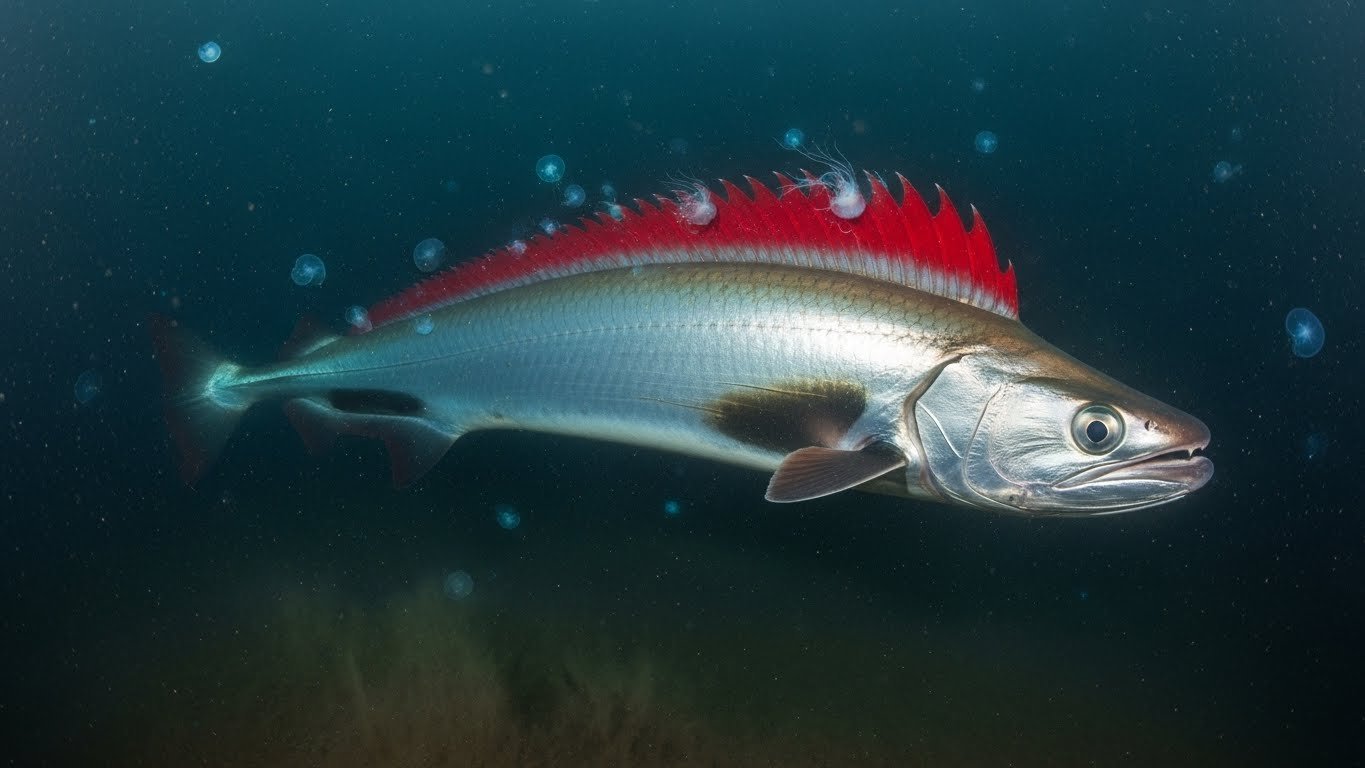
The oarfish is one of the longest fish species in the world. Its body is long, thin, and looks like a silver ribbon. It can grow up to 30 feet long—or even longer in rare cases! That’s as long as a school bus.
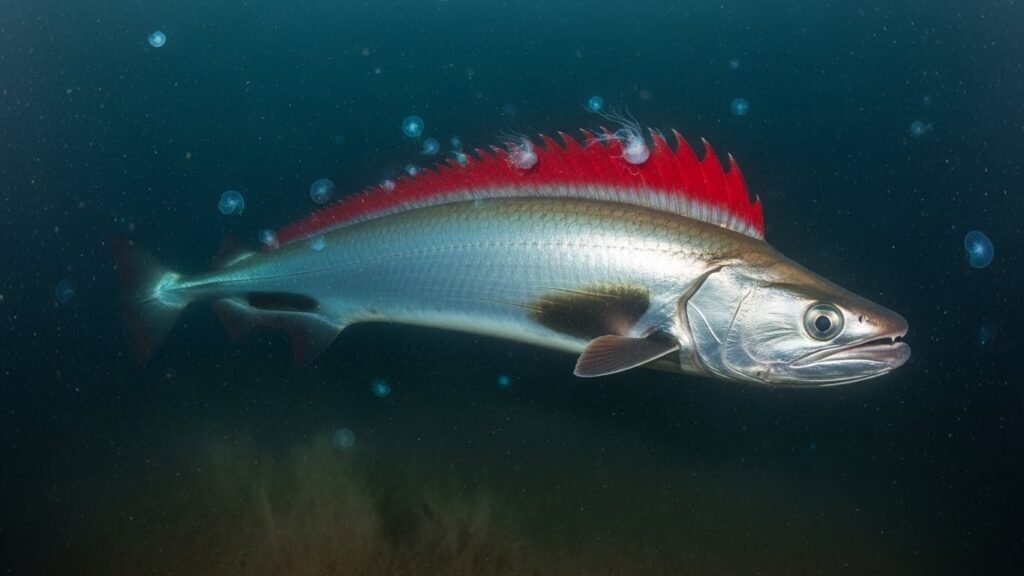
The name “oarfish” comes from its long, oar-like fins that help it move slowly through the water. It’s also called the “king of herrings” even though it’s not a herring. Its striped, shiny body and bright red fin on top add to its strange and royal appearance.
The oarfish is not dangerous to humans. It doesn’t have big teeth, claws, or anything scary. In fact, it’s shy and peaceful. It lives very deep in the ocean, sometimes over 3,000 feet down, where light doesn’t reach. Because of this, people rarely see one alive.
When one rises to the surface, people get excited—or even a bit scared. That’s where the nickname doomsday fish oarfish comes from.
Where Does the Doomsday Fish Oarfish Live?
The oarfish lives deep in the world’s oceans, especially in warmer waters. It is found in the Atlantic, Pacific, and Indian Oceans, often near tropical and temperate regions.
They live so deep—thousands of feet under the surface—that they are almost never seen by humans. Oarfish enjoy the mesopelagic and bathypelagic zones of the sea. Those are big words for parts of the ocean where it is always dark and cold.
Sometimes, though, an oarfish gets sick, old, or hurt and rises closer to the surface. That’s when people find them near beaches and take pictures or share videos. These rare sightings often bring attention from the news, social media, and curious locals.
The doomsday fish oarfish has puzzled scientists for years because we know so little about its life in the deep ocean. But whenever one appears, we get a chance to learn just a little more.
Why Is It Called the Doomsday Fish?
The nickname “doomsday fish” started in Japan and parts of Asia, where old legends connect oarfish with natural disasters. People believe that when an oarfish comes to the surface, it means an earthquake or tsunami might be coming soon.
In these stories, oarfish are seen as messengers from the sea gods—warning people of coming danger. In some cases, people have noticed oarfish coming ashore a few days or weeks before a real earthquake. This has made many believe that the fish can sense changes deep in the ocean before humans can.
Even though this belief is popular in some cultures, there’s no solid scientific proof linking oarfish to earthquakes. Scientists say the fish might just be sick or confused when it comes close to land.
Still, the name doomsday fish oarfish has stuck—especially when people see them before or after big natural events.
How Big Can an Oarfish Get?
The oarfish is one of the longest fish living in the ocean today. An adult oarfish can grow to 25 to 30 feet long, and some rumors say even longer. That’s longer than a giraffe is tall!
Even though they are long, oarfish are not heavy or thick. They usually weigh around 600 pounds at their largest. Their bodies are flat and ribbon-like, which makes them look like swimming streamers or snakes.
Their size often surprises fishermen or beachgoers when one washes up on a shore. People might think it’s a sea monster because of its long shape and shiny body.
The doomsday fish oarfish has earned much of its legend just from its strange and impressive length. Being that big and showing up suddenly gets lots of attention—especially from people seeing it for the first time.
What Does the Oarfish Eat?
Even though it looks huge and scary, the oarfish actually eats very small sea creatures. It feeds mainly on zooplankton, krill, tiny shrimp, and other small animals that float through the ocean with the currents.
Oarfish use their small mouths and gill rakers to filter food as they swim. They don’t chase after prey. Instead, they glide slowly with their mouths open, letting food come to them. Some scientists believe they may also eat fish larvae and jelly-like animals called salps.
They usually do all of their feeding in the dark depths of the ocean, far from the sunlight. That’s why we almost never get to see them eat.
It’s amazing that such a long creature can live off such tiny food—but the doomsday fish oarfish has adapted perfectly to life in the deep sea.
How Does an Oarfish Swim?
Oarfish move differently than most fish. Instead of wiggling side to side, they use a special fin that runs along the top of their bodies. This long dorsal fin ripples like a wave, pushing them forward.
They can also float with their heads pointed straight up and their tails pointed down. Sometimes they do this for long periods. It may help them catch food drifting down from above or keep an eye on their surroundings.
Because they move slowly and gently, oarfish seem peaceful and calm. This style of motion is great for deep-sea swimming, where energy needs to be saved and sudden movement could attract predators.
The graceful swimming of the doomsday fish oarfish only adds to its mystical and magical reputation.
Are Oarfish Dangerous to Humans?
No, oarfish are not dangerous at all. They don’t have sharp teeth, they don’t attack, and they don’t poison anyone. Most of the time, oarfish live so deep that people never even see them.
When one does come near the surface, it’s usually injured, sick, or dying. Even in those rare cases, they don’t hurt people.
Fishermen who’ve caught oarfish by accident say they are calm and easy to handle. Some have even tried to release them back into deeper waters, although the fish usually don’t survive long in shallow areas.
Despite the name doomsday fish oarfish, there’s nothing to fear from the fish itself. The myths and legends are more about the ocean and natural events, not about the fish trying to do harm.
Why Do Oarfish Come Near the Surface?
Most of the time, oarfish stay deep underwater—so when one is found near the surface or on the shore, it makes headlines. So why do they come up?
There are a few possible reasons:
- Injury or Illness: If the fish is sick or has been attacked by another animal, it might leave the deep ocean for shallower water.
- Environmental Changes: Shifts in temperature, pressure, or oxygen levels could confuse the fish and cause it to rise.
- Breeding or Old Age: Some scientists think older oarfish may naturally move upwards before they die.
Though some believe this signals earthquakes, most scientists say there’s no strong proof to support it. Still, when it happens, the doomsday fish oarfish quickly becomes the talk of the town.
Interesting Facts About the Doomsday Fish Oarfish
- The oarfish is the longest bony fish in the ocean.
- It was not seen in the wild alive and swimming until 2001.
- Oarfish have no scales—their skin is smooth and shiny.
- Their long red fins may help confuse predators or attract mates.
- The Japanese name for the oarfish is “Ryugu no tsukai,” meaning “Messenger from the Sea God’s Palace.”
- Oarfish are solitary and usually swim alone.
- They are one of the few fish that can raise and lower themselves vertically in the ocean.
These fun facts make the doomsday fish oarfish even more fun to learn and talk about!
What Scientists Are Still Learning
Even with modern cameras and submarines, there’s still a ton we don’t know about the doomsday fish oarfish.
Because they live so deep, it is hard to study them in their natural habitat. Most of what we know comes from dead or dying oarfish that float to the surface—or from rare video clips taken by deep-sea explorers.
Scientists want to learn more about how oarfish eat, breed, and move. They also hope to find out if there’s any real connection between oarfish sightings and earthquakes. Some researchers are even tagging oarfish when possible to track where they go.
One thing is clear: there’s still much to discover about this mysterious messenger of the deep.
FAQs
1. Is the oarfish really a sign of earthquakes?
There’s no scientific proof that oarfish predict earthquakes, but some people still believe the legend.
2. How long do oarfish live?
Scientists think they live around 10–20 years, but exact lifespans are still unknown.
3. Can humans eat oarfish?
Some have tried, but oarfish are not usually eaten. Their flesh is said to be too mushy for cooking.
4. What do oarfish look like?
They are very long, flat fish with shiny silver skin and a red fin running along their back.
5. How often are oarfish seen by people?
Rarely! Most sightings happen after storms or sudden water temperature changes bring them to the surface.
6. Are oarfish endangered?
No, but because they are so hard to study, scientists do not know how many live in the ocean.
Conclusion
The doomsday fish oarfish is one of the ocean’s strangest, largest, and most fascinating creatures. It has sparked myths, brought wonder to beachgoers, and kept scientists curious.
Even though it’s rare to see one alive, every oarfish sighting teaches us something valuable about the deep sea. Its gentle nature, unique shape, and mysterious habits make it one of the most legendary fish swimming in our oceans.
So next time you see a headline about an oarfish washing ashore, don’t be afraid. Instead, take a moment to wonder: What secrets still hide deep beneath the waves?