
Introduction
When you hear the words finland undersea cables you might picture giant ropes deep in the ocean. And you’d be right—sort of! These special cables lie quietly under the sea, but they carry something super important: internet, phone data, and even electricity. Without them, we couldn’t send emails, make video calls, or browse the web as easily as we do now.
Finland, a country in Northern Europe known for its tech smarts and forests, is a key part of this underwater network. Cables run under the Baltic Sea, linking Finland with other places like Sweden, Germany, Estonia, and even across the Arctic. Some carry digital data, while others are part of clean energy networks.
In this article, we’ll explain how these Finland undersea cables work, why they matter, and what makes them so special. Whether you’re a student, a curious reader, or just someone who loves tech, you’ll find this easy-to-follow guide full of helpful facts.
Let’s unravel the mystery beneath the sea!
What Are Undersea Cables Anyway?
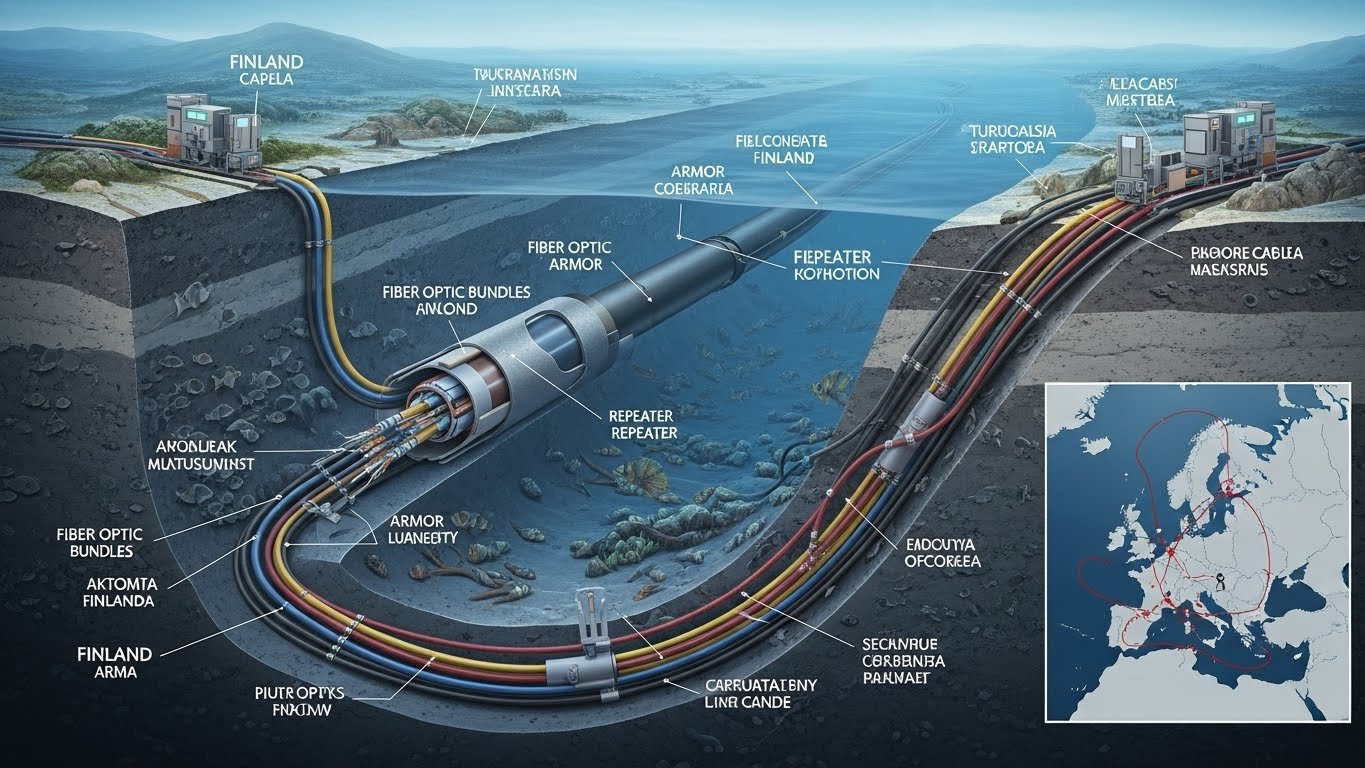
Before we talk about Finland undersea cables, you need to know what undersea cables are in general. They are long, thick wires that sit on the floor of the ocean. These cables connect countries across the world. Even though they’re hidden under water, they help us do everyday things like watch videos online or talk on the phone.
There are two main types of undersea cables:
- Telecom cables: These carry internet, phone calls, and data.
- Power cables: These send electricity, often between two countries.
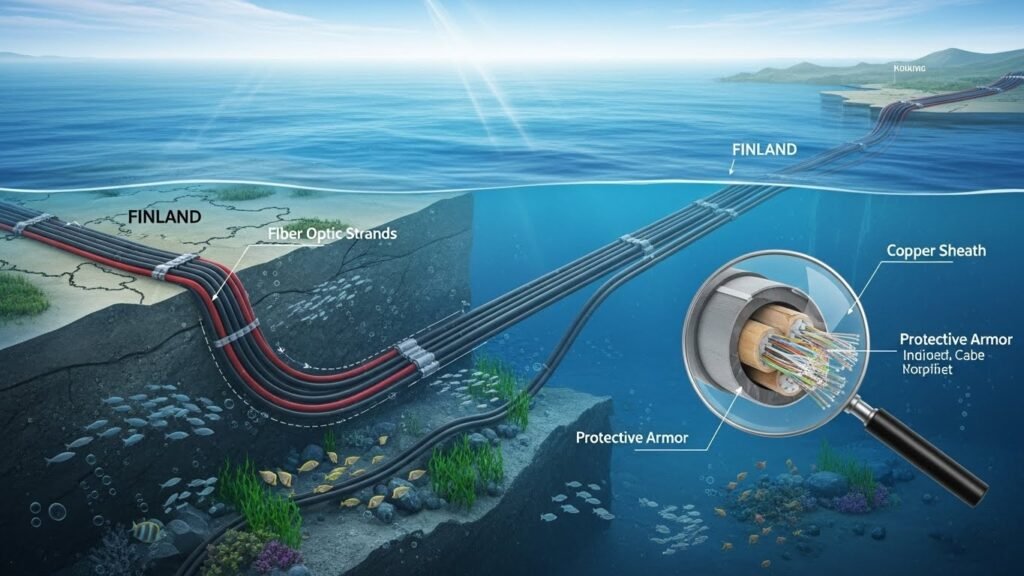
Some undersea cables can be as thin as a garden hose, while others are thicker and have layers to protect them from water, fish, and ocean currents. They are built to last for up to 25 years or more.
The Finland undersea cables include both kinds, and they are very important for communication and energy in the region.
Where Are Finland’s Undersea Cables Located?
Finland is a coastal country with lots of shoreline along the Baltic Sea. Because it’s between Russia, Sweden, and Estonia, it’s a prime location for laying undersea cables.
Some of the important cable lines are:
- C-Lion1: A data cable connecting Finland to Germany.
- Sea Lion: Connects Finland and Estonia.
- FINNER: A Finland-Sweden connection.
- Balticconnector: A gas pipeline with related data lines between Finland and Estonia.
There’s also a growing interest in Arctic undersea cables, like Far North Fiber, which may connect Finland to Asia and North America through the Arctic Ocean.
So, the Finland undersea cables form a web of connections across Northern Europe. They sit quietly on the seafloor, but their work affects millions of people every day.
How Do Finland Undersea Cables Work?
The Finland undersea cables that carry data work mostly like giant underwater internet wires. They send light pulses from one end to the other using fiber optic technology. These pulses represent the 1s and 0s of digital information.
Imagine sending a message from Finland to Germany. That message turns into light, flashes through the cable, and arrives on the other end in just a second. It’s like magic—except it’s really science!
Power cables between Finland and neighbors are built differently. Those carry high-voltage electricity between energy networks. This way, Finland can share or receive clean power like wind energy or hydroelectricity when needed.
Cables are monitored by control centers. If there’s a break or problem, they send alerts so expert repair crews can take underwater robots to fix it.
Even though we don’t see them, the Finland undersea cables are always at work—24/7.
Why Are Finland Undersea Cables Important?
You may be wondering—why all the fuss over long wires under the sea? The truth is, Finland undersea cables are crucial for both Finland and its neighbors.
Here’s why they matter:
- Internet speed: Fast connections get your data where it needs to go fast and safely.
- Backup routes: If a land connection breaks, undersea cables can keep data flowing.
- National security: Cables support secure government and military communication.
- Energy sharing: Power cables help stabilize electricity supplies between countries.
- Trade and business: Big companies rely on fast, stable internet—especially tech firms in Finland.
Without these cables, cloud services, streaming, and even video chats would slow down or fail entirely. That’s why countries invest heavily in them and protect them.
Finland as a Digital Gateway of the North
Finland is more than a user of cables—it’s becoming a hub for digital traffic between east and west. Thanks to its strong digital infrastructure, political stability, and smart investments, Finland is a key player in Northern Europe’s digital future.
Projects like C-Lion1 and others make Finland a safer and faster connection point for European internet traffic. Instead of data taking longer routes through central Europe, it can pass through Finland. That helps speed up services for countries like Sweden, Germany, and the Baltics.
Future projects like Far North Fiber, could make Finland a “digital bridge” between Europe, Asia, and North America along the Arctic route. This would be the longest fiber optic undersea cable in the world—and Finland would be at the center!
So, Finland undersea cables are helping grow not just Finland’s economy, but also the entire regional digital economy.
What Is the C-Lion1 Cable?
Let’s take a closer look at C-Lion1, one of the most important Finland undersea cables.
C-Lion1 is a fiber optic submarine cable that connects Hanko, Finland to Rostock, Germany under the Baltic Sea. It became operational in 2016 and was the first direct cable between Finland and Central Europe.
Here are some quick facts:
- Length: Over 1,200 kilometers
- Speed: Supports terabits of data per second
- Function: Major route for internet and digital traffic
Thanks to C-Lion1, Finland didn’t have to rely on slower or less secure land routes through Russia or Scandinavia for data. It also supports faster cloud services, hosting, and connections for Finnish businesses.
In short, C-Lion1 made Finland independent, connected, and ready for the future.
Undersea Cable Safety and Security
Since they are underwater, you might wonder—what keeps these cables safe?
The good news is, Finland undersea cables are built to be tough. They have strong outer layers that protect against fishing gear, anchors, and ocean pressure. Most are buried beneath the seafloor in shallow areas to avoid accidental damage.
But there are risks, too. Some threats come from:
- Anchors dragging accidentally
- Fishing boats pulling up lines
- Natural disasters like undersea earthquakes
- Deliberate sabotage
That’s why Finland and other countries monitor these cables using special sensors and security systems. There are also international agreements protecting cables under the sea.
Taking care of Finland’s undersea cables is a national priority. After all, they carry valuable data across the globe.
Can Undersea Cables Be Broken or Hacked?
Yes, but it’s rare. While Finland undersea cables are well protected, damage or attacks can happen.
Sometimes, fishing boats or cargo ships accidentally cut a cable by dragging an anchor. Repairs can take days or even weeks. Luckily, many cables have backup routes, so users don’t usually notice big delays.
Can cables be hacked? Technically, yes. Some data cables can be tapped, meaning outsiders might try to intercept messages. That’s why data is usually encrypted before it travels along the cable. Without the special key, the data remains safe.
So while there is risk, systems are in place to keep your information safe and private across Finland’s underwater cable network.
Future of Finland Undersea Cables: More Speed, More Connections
The future of Finland undersea cables looks bright—and busy! As the demand for faster streaming, real-time gaming, and cloud services grows, so does the need for faster and smarter undersea cables.
Exciting projects include:
- Far North Fiber: A planned Arctic cable linking Europe (through Finland) to Asia and the US.
- Digital energy cables: Combining power and data lines to save space and cost.
- AI-powered monitoring: Using artificial intelligence to check cable health and detect issues early.
These future cables will help Finland handle more data, build stronger ties with tech partners, and stay ahead in global digital progress.
Innovation, safety, and collaboration will keep Finland’s undersea infrastructure strong and helpful for years to come.
Real-World Impact: How These Cables Touch Our Daily Lives
You may not think much about undersea cables during your day, but they’re always helping in the background.
Thanks to Finland undersea cables, people can:
- Stream videos with no buffering
- Video call family across long distances
- Do online banking safely
- Run tech businesses with cloud services
- Play online games with little lag
For example, a child in Finland watching a cartoon from the U.S. does so thanks to these connections. A worker in Germany accessing files from Finland’s servers also relies on these cables.
When schools went online during the pandemic, and millions stayed connected from home, these cables saved the day.
Without Finland undersea cables, the internet we count on wouldn’t run as smoothly as it does.
FAQs
1. What do Finland undersea cables do?
They carry digital data (like internet and phone calls) and electricity across countries through the ocean floor.
2. How long are these undersea cables?
Some are hundreds or even over 1,000 kilometers long, like the C-Lion1 cable between Finland and Germany.
3. Are Finland undersea cables safe?
Yes. They are protected with strong coatings and monitored closely. But accidents can still happen occasionally.
4. Can these cables predict earthquakes or tsunamis?
Not exactly, but scientists are exploring ways to use undersea cables for early detection of sea movement.
5. Why is Finland important in undersea cable networks?
It’s in a great location to connect eastern and western parts of the world and invests heavily in tech and security.
6. Do other countries share these cables with Finland?
Yes, Finland’s undersea cables connect with nations like Germany, Sweden, Estonia, and more—creating a strong network.
Conclusion
Now that you’ve explored how Finland undersea cables work, it’s easy to see just how valuable they are. They hide beneath the ocean, but their role is massive. These cables connect people, carry power, support business, and protect data.
From the speed of your internet to the success of cloud companies, undersea cables are part of everyday life—even though we rarely think about them. Finland’s smart approach to laying and protecting these cables helps shape the future of communication and technology across Europe and beyond.
So the next time you send a message, play a game, or stream a movie, remember: deep below the waves, the doers of the digital world are at work, bringing us all a little bit closer together.