
Introduction
Are you getting ready to take your DMV test or learn how to drive? Feeling overwhelmed by all the road signs? Don’t worry—you’re not alone! That’s why we created this cheat sheet dmv road signs and meanings in one easy-to-read place.
Learning road signs is a big part of driving safely. These signs help everyone know what to do on the road. They tell us when to stop, where to turn, and how fast we can drive. If you want to pass your learner’s permit test (and drive with confidence), it’s important to know what each sign means.
In this guide, you’ll learn the most common DMV road signs and their meanings. We use simple words, clear descriptions, and helpful visuals in your mind to make remembering them feel easier. Whether you’re a teen learning to drive or a parent reviewing with your child, this resource was made just for you.
Let’s hit the road—and pass that test together!
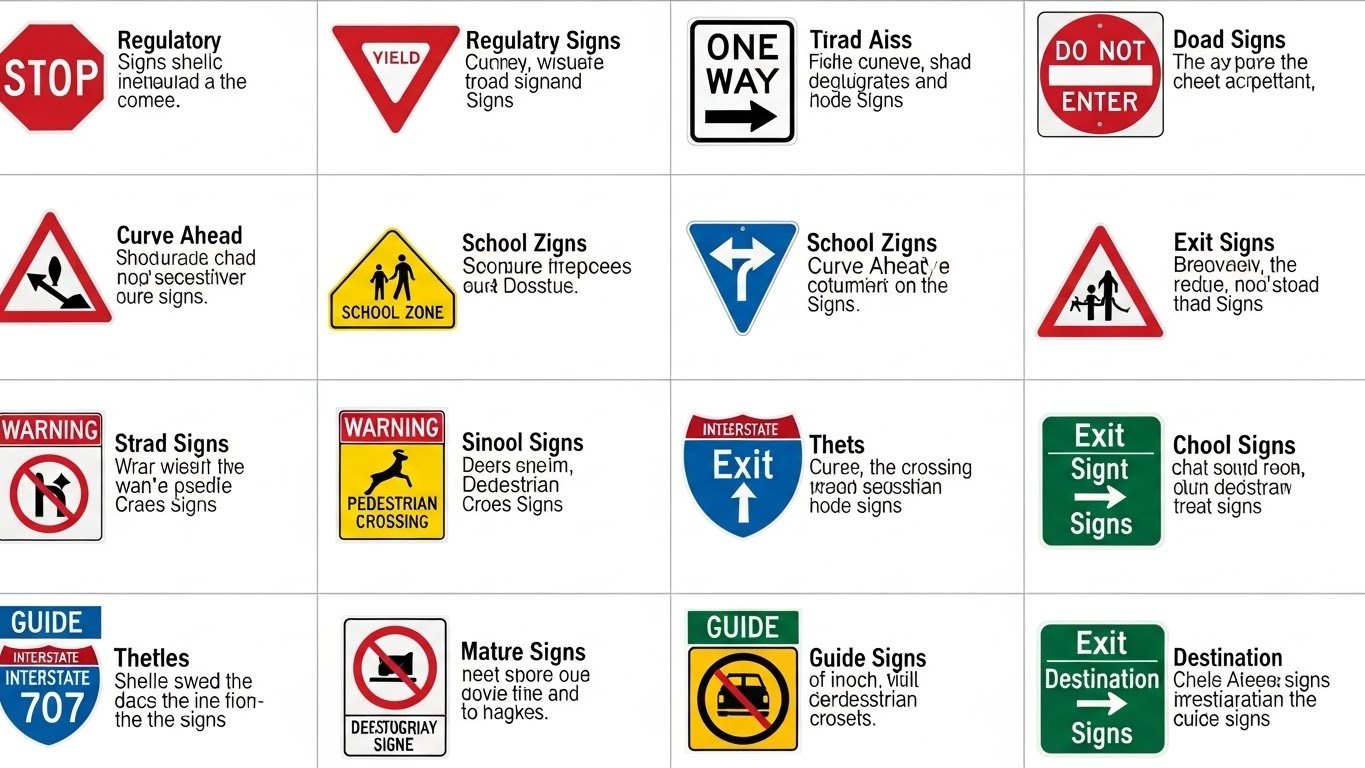
Regulatory Signs: The Rules of the Road
Regulatory signs tell you what you must or must not do on the road. They are like the rules of driving written on signs. Most of these signs are red, white, and black.
Examples of regulatory signs include:
- STOP: This red, octagon-shaped sign means you must stop completely, check both ways, and go only when it’s safe.
- YIELD: This triangle-shaped sign means slow down, and let others go first. You stop only if needed.
- DO NOT ENTER: This means the road is off-limits. You’re not allowed to go that way—it’s likely a one-way.
- SPEED LIMIT: This sign tells you the highest speed you can legally drive. Always obey it to stay safe.
- NO U-TURN / NO LEFT TURN: These signs forbid certain turns for safety reasons.
Knowing regulatory signs helps you follow traffic laws and avoid tickets or accidents. They’re the foundation of safe driving.
Warning Signs: Pay Attention to What’s Ahead
Warning signs tell you that something is coming up that you should know about. They’re usually yellow and shaped like a diamond.
These signs don’t tell you to stop, but they do let you know to slow down, look around, and stay alert.
Common warning signs include:
- Slippery When Wet: Be careful in rainy or wet weather—your tires can slide.
- Curve Ahead: Prepare to turn your steering wheel. Slow down before the bend.
- Pedestrian Crossing: People may walk across the road here. Be ready to stop.
- School Zone: Children may be nearby. Slow down and follow school zone speed limits.
- Deer Crossing: Watch out for animals that may suddenly jump into the road.
Use warning signs like helpful advice from the road—they give you time to react before things change.
Guide Signs: Helping You Find Your Way
Guide signs help drivers find destinations, exits, or points of interest. They are usually green, blue, or brown.
These are the signs you’ll see most often on highways.
Here are some types of guide signs:
- Exit Signs: Show which lane to take to leave a highway or enter a new road.
- Mileage Signs: Tell you how many miles to the next city or location.
- Rest Area Signs: Point toward bathrooms, picnic spots, and parking.
- Hospital Signs: Let you know a hospital is nearby in case of emergency.
- Recreation Signs (brown): Direct you to parks, campgrounds, or historical sites.
These signs are meant to be helpful and welcoming. They’re like friendly guides on your road trip.
Construction and Work Zone Signs
Work zone signs tell you there is construction, maintenance, or changes happening on the road. Most of them are orange and diamond-shaped.
They often show up with cones, flashing lights, or flag workers. Slow down in these areas and watch for workers.
Common examples include:
- Road Work Ahead
- Detour
- Lane Closed
- Flagger Ahead
- Men (or Workers) at Work
Construction zones often have lower speed limits, even if no one is working. Fines are also higher in these areas. Pay attention and drive carefully—it’s better to be safe and respectful of the people working on the roads.
Railroad and Train Warning Signs
Trains are big, fast, and can’t stop quickly. That’s why railroad signs are super important for all drivers to know.
The main ones include:
- Round Yellow Sign with “X” and “R R”: This means you’re approaching train tracks. Slow down and look both ways.
- Railroad Crossbuck Sign: This “X”-shaped sign acts like a yield sign at the railroad.
- Lights and Gates: Flashing red lights or gates mean a train is coming. Never try to go around them!
If you hear or see anything near a rail crossing, always stop and wait. Even if the train looks far away, it could be coming faster than you think.
Shapes and Colors of Road Signs: How to Remember Them
Did you know road signs follow a system of shapes and colors? This makes them easier to understand from a distance—even if you can’t read the words right away.
Here are some quick cheat tips:
- Red = Stop, Danger, or Prohibited
- Yellow = Warning or Caution
- White/Black = Regulation (Speed Limits, Rules)
- Green = Guide or Direction
- Blue = Services (Hospitals, Rest Stops)
- Brown = Parks or Historic Areas
- Orange = Construction or Temporary Conditions
Common Shapes:
- Octagon (8 sides) = Stop
- Triangle (point down) = Yield
- Rectangle = Rules or Directions
- Diamond = Warning
- Circle = Railroad Alert
- Pentagon (5 sides) = School Zone
Knowing these helps you recognize sign meanings at a glance—perfect for quick decisions while driving.
Must-Know DMV Signs for the Written Test
Getting ready for your learner’s permit or license test? There are certain signs that show up often. Make these part of your cheat sheet for DMV road signs and meanings.
High-priority signs:
- Stop Sign
- Yield Sign
- Speed Limit Sign
- No Passing Zone
- One Way
- School Zone
- Slippery Road
- Divided Highway Begins/Ends
- Merging Traffic
- Crossroad Ahead
Print out flashcards or quiz yourself before the exam. Using visuals and repeating the signs daily can help lock them in your memory.
Signs That Confuse New Drivers (and How to Remember Them)
Some road signs look simple. Others? Not so much. Let’s clear up a few confusing road signs.
- Divided Highway Begins vs. Ends: If the arrow splits up—it’s beginning. If the arrows merge—it’s ending.
- Merge Sign vs. Added Lane Sign: Merge signs mean you need to blend in. Added lane signs show a new lane is forming.
- No Passing Zone: This is a sideways triangle on the left side of the road. It’s uncommon, but important!
- Yield vs. Yield to Bikes: These look alike. If there’s a bicycle picture, let bikers go first.
It’s okay to mix signs up at first. Just keep practicing and using your cheat sheet. With time, you’ll get the hang of it.
Real-Life Tips for Recognizing Signs While Driving
Reading about signs is helpful—but seeing them in real life is even better. Here’s how to practice while you’re out on the road:
- Be a “sign spotter” when riding in a car (even as a passenger).
- Say the sign out loud and talk through what it means.
- Notice how drivers react to the signs around them.
- Use a practice driving route to look for different sign types.
By training your brain to notice signs every day, you’ll build habits that make you a safer, smarter driver.
How Road Signs Keep Us Protected
Road signs don’t just give directions—they save lives. Imagine a world with no stop signs or speed limits. It would be scary and unsafe.
Signs help us:
- Know when to stop or go
- Avoid accidents and collisions
- Stay on the right route
- Protect children near schools
- Slow down in dangerous areas
Whether it’s a simple sign in your neighborhood or a big one on the highway, each sign is placed with safety in mind. The more we understand them, the better we protect ourselves and others.
International Road Signs vs. U.S. DMV Signs
Planning to travel or drive in other countries someday? Road signs look different around the world, but the basic ideas stay the same.
For example:
- In Europe, stop signs are still red octagons.
- Warning signs in the UK are usually triangles, not diamonds.
- Speed limits might be in kilometers per hour instead of miles!
Even though the signs look different, most of the shapes, symbols, and colors help drivers understand across languages. Still, studying local road signs is important before driving in a new country.
Practice Tests and Flashcards You Can Use
Want to really master your knowledge? Use these helpful tools:
- DMV practice tests: Free tests are online by your local DMV or on trusted driving apps.
- Printable sign flashcards: Print out or draw signs with meanings on the back. Quiz yourself daily.
- Sign matching games: Try road sign matching charts or online “name that sign” games.
- Study with a friend: Ask quiz questions back and forth—make it fun and friendly.
Mix these with your cheat sheet for DMV road signs and meanings, and you’ll pass your test with flying colors.
FAQs
1. How many road signs should I know for the DMV test?
Each DMV test is different, but you should study at least 50 of the most common road signs and their meanings to be safe.
2. What is the most important sign I should remember?
The stop sign is the most important. It appears everywhere, and stopping fully is critical for safety and passing your test.
3. What shape is a yield sign?
A yield sign is an upside-down triangle. It means to slow down and give way to others.
4. Are construction signs permanent?
No, most road work signs are temporary, but while they’re up, they must be followed. Fines can double in these areas too!
5. I see a brown road sign—what does that mean?
Brown signs point to parks, campsites, hiking trails, and other places for fun and recreation.
6. Is it okay if I forget a few signs on the test?
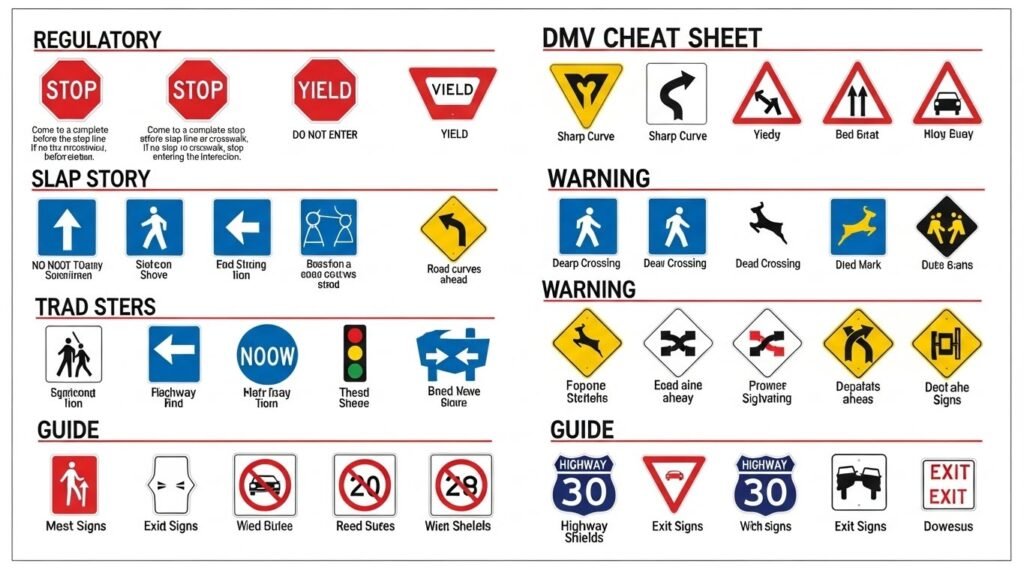
You don’t need to be perfect, but missing multiple sign questions might cause you to fail. The cheat sheet in this guide is a helpful way to review quickly.
Conclusion
Learning road signs doesn’t have to be hard or boring. With this cheat sheet for DMV road signs and meanings, you now have a simple, easy guide to help you study, practice, and feel confident behind the wheel.
Road signs are more than test questions—they’re tools that will keep you and others safe for life. Now that you’ve made it through this guide, it’s time to take what you’ve learned and put it into practice.
So whether you’re planning to take your DMV permit test or just want to brush up as a driver, you’re already on the right path.